

Revitalising Navigation & Information Architecture at the University of Melbourne
Simplifying one of the largest digital estates in Australian higher education through clarity, structure, and design leadership.
Project Overview
The University of Melbourne’s website had grown into a vast, fragmented ecosystem. Multiple subdomains, inconsistent navigation, and duplicated content made it difficult for students, researchers, and partners to find what they needed.
I worked with the University’s central Navigation & Information Architecture team (UNIT) to restructure navigation and IA, align stakeholders, and establish a foundation for a scalable digital future.
The Challenge
Across all user groups we heard the same feedback:
- “Too many websites. So many different links and places to access info.” – Graduate Researcher
- “Simplify things. Have everything in one place, clear, simple, and well-communicated.” – Commencing Student
Some of the key issues:
- Inconsistent navigation: Different menus and structures across faculties.
- Duplication: Multiple versions of the same content, often outdated.
- Confusing terminology: Labels like “Graduate” vs “Postgraduate” created friction.
- Subdomain sprawl: study site, research portals, and faculty microsites diluted the brand and disoriented users.
My Role
I led the project in three capacities:
- UX Lead – shaping the IA strategy, roadmap, and research.
- Facilitator – running workshops and ensuring alignment across faculties and central services.
- UI Lead – overseeing wireframes and prototypes for testing.
This end-to-end involvement ensured consistency from strategy through to design.
Our Approach
The project followed a structured process that combined research, co-design, and validation — ensuring each stage was transparent, collaborative, and backed by evidence.
Project Planning – roadmap, timeline, and design principles to align stakeholders from the start
Discovery Sessions – interviews and workshops to uncover pain points and define opportunities
Competitive & Current State Analysis – benchmarking against sector best practice and auditing the existing IA/content structure
Tree Testing & Usability Testing – validating concepts with Maze to compare task success and refine navigation
Stakeholder Workshops – co-designing the final IA and shaping a content strategy with broad faculty input
Solution Delivery & Playback – final IA framework, navigation model, governance recommendations, and stakeholder playback sessions to secure alignment
Discovery (Research & Insights)
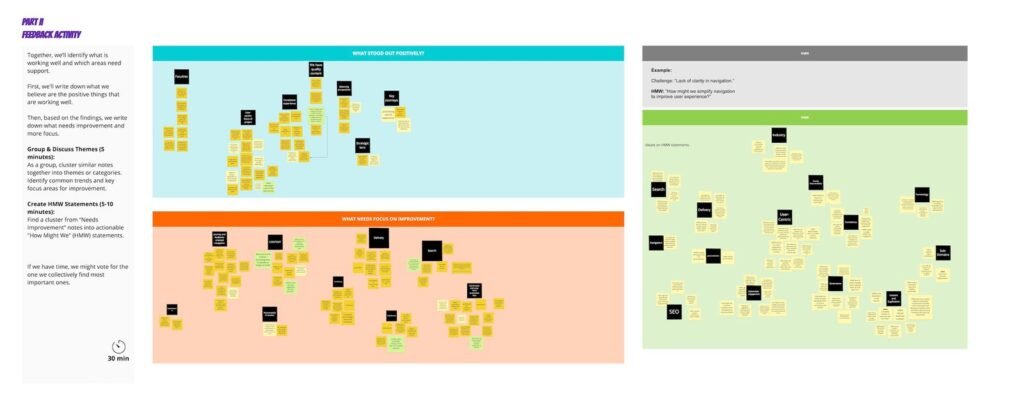
Conducted stakeholder interviews and workshops.
Benchmarked competitor universities and sector best practice.
Reviewed prior research to identify recurring pain points.
Why it mattered: Built an evidence-based foundation and gave stakeholders a shared understanding of the problems.
Content Audit & Co-Design
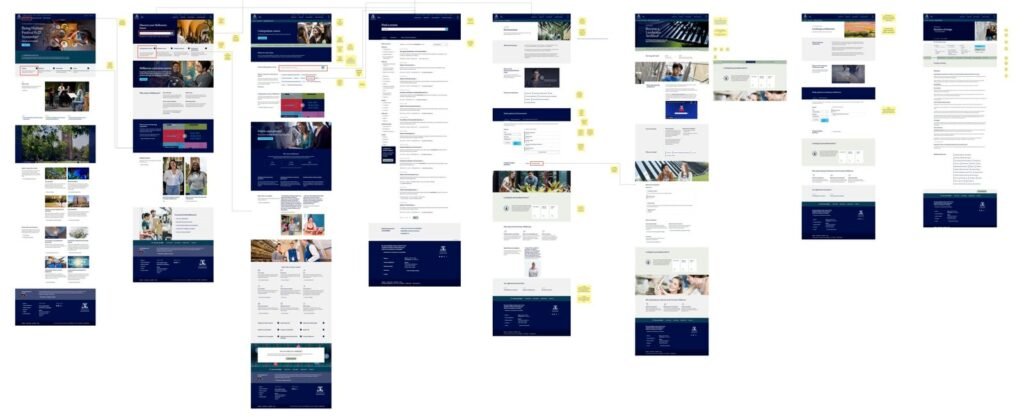
Audited content for duplication, gaps, and inconsistent labelling.
Facilitated workshops with faculties to draft IA concepts via card sorting and journey mapping.
Why it mattered: Clarified priority content and built alignment across the organisation.
Testing & Validation
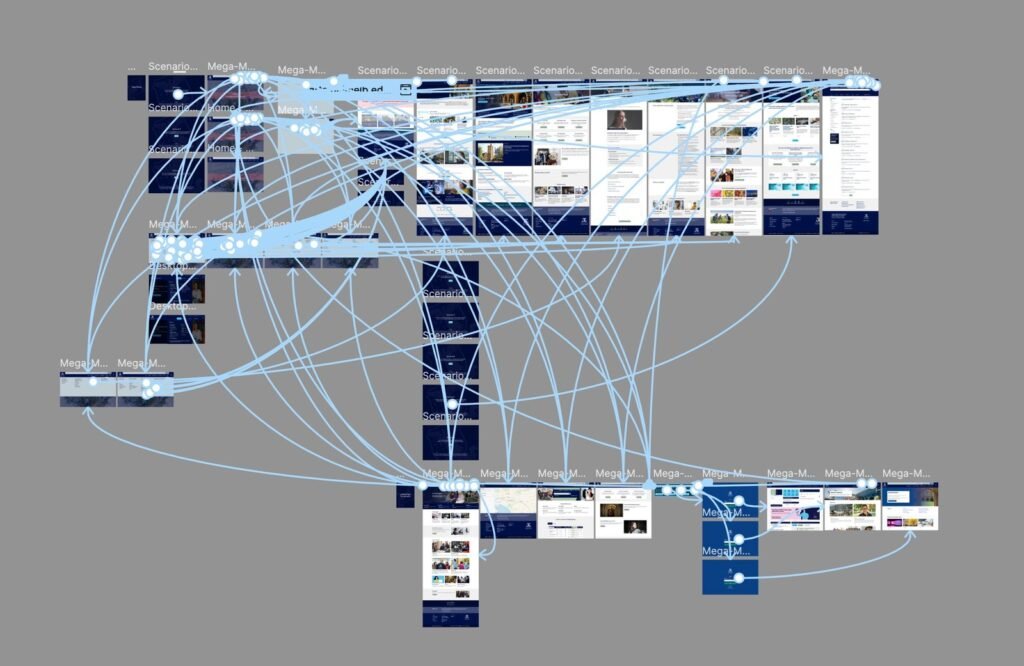
Ran tree testing on current vs. new IA structures.
Built and tested navigation prototypes with users.
Why it mattered: Validation shifted decisions from opinion to data, de-risking future investment.

Stakeholder Workshop & Playback
Convened a comprehensive playback of findings.
Facilitated co-design sessions to refine IA and content strategy.
Addressed governance, terminology, and navigation pathways.
Why it mattered: Created final alignment and ownership across faculties, reducing risk of rework at implementation.
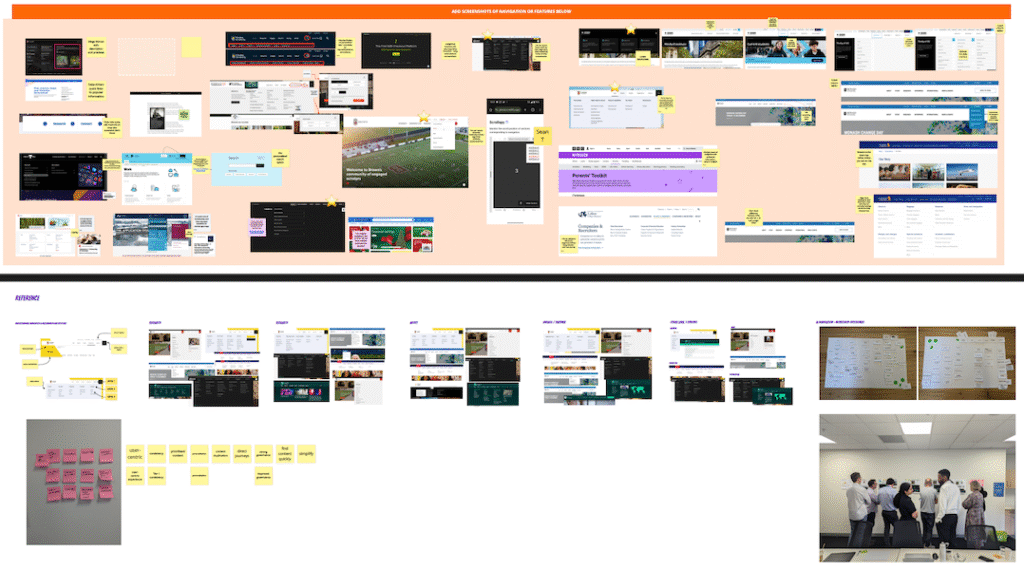
Design Workshop & Navigation UI
Held a focused design workshop to translate the validated IA into navigation patterns and interface concepts.
Explored menu structures, labelling, and pathways with stakeholders to ground the IA in tangible design decisions.
Led the design from wireframes and prototypes that turned into production designs.
Why it mattered: Bridged strategy and execution — ensuring navigation was intuitive, user-centred, and visually aligned with the broader digital ecosystem.
The Solution
Through iteration and testing, we finalised a navigation and IA framework that:
Simplified top-level navigation into four clear sections.
Separated Research and Partnerships to reduce cognitive load.
Recommended moving subdomains into a unified subdirectory structure.
Introduced governance and content strategy for long-term consistency.
Early Outcomes
Even before full rollout, the project delivered:
Higher success rates: Task success improved from 31% to 71% in tree testing.
Stakeholder confidence: Clear evidence gave leadership assurance that the investment would improve satisfaction.
Strategic alignment: IA now supports core goals in research, recruitment, and external engagement.
Roadmap for transformation: Clear next steps for search, personalisation, and dynamic hubs.